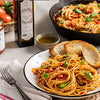
Welcome to our recipe page! Please click the links below to explore our Spanish and Moroccan recipes, some cooking guidelines, as well as an introduction to our chef. Please do not hesitate to contact us or come by the store to get helpful tips.
Spanish Recipe: Seafood Paella new!
Spanish Recipe: Paella Valenciana new!
Moroccan Recipe: Tagine of Chicken
Moroccan Recipe: Matboukha
Guidelines: Polished Steel Paella Pan Care Instructions new!
Guidelines: Tagine Curing, Seasoning & Cleaning
About: Chef Casablanca
Looking for a traditional Spanish recipe? The key to making successful paella is to:
Authentic Spanish Seafood Paella
Serves 4
Ingredients
Preparation
Enjoy your paella!
Paella Valenciana - Paella from Valencia
Serves 4
Ingredients
Preparation
Enjoy!
Tagine of Chicken, Preserved Lemons and Olives
Serves 6-8
Ingredients
Preparation
Cut into serving sized pieces or similar amount of chicken breasts (preferably 2 whole free ranch chickens), clean, drain and rub the chicken with fresh lemons and salt. Leave it in the fridge overnight if possible or for 1 hour then rinse and drain again.
Mix the garlic, black pepper, ginger, saffron, salt, onion and 1/4 of olive oil than rub the chicken with the mixture and leave it for 1 hour for the meat to absorb all the spices.
Put olive oil, chicken and all the ingredients in a Tagine such as: onions, garlic, saffron, ginger, lemon juice, salt and water. Mix and cover then let cook on a medium fire, till the chicken is almost cooked, add preserved lemon slices, olives, and cook for 5 minutes on a low fire.
Present the chicken, watered with sauce and decorated with olives and preserved lemon slices.
(Baked Green, Red or yellow peppers and tomatoes with poivron rouge)
4-6 servings
Ingredients:
Preparation
Preheat the oven to 400 degrees. Wash the vegetables then put the tomatoes and peppers inside the oven to bake for 20 minutes. (Keep an eye on the tomatoes as they tend to bake faster). Take the tomatoes and peppers out of the oven and peel the skin off and take off the seeds.
Cut them in small peaces about 1/2 inch than put aside.
In a separate pan put a ¼ of olive oil, thinly chopped garlic, cumin, paprika, and salt to sauté for five minutes.
Then add the tomatoes and peppers to the pan and stir. Mix all the ingredients until the sauce thickens.
Add ¼ of olive oil on top and sauté for another 10 minutes.
Set it aside to cool down.
Then add 2 tbsp of white vinegar.
Serve on a large platter decorated with preserved lemons wedges and parsley.
Polished Steel Paella Pan
Polished Steel Paella Pan Care Instructions
Using your pan for the first time
Before you can enjoy your new pan for the first time you will need to remove the label and the thin, protective coat of varnish. The easiest way to do this is to first heat the pan very slightly - the label should then peel off very easily. Next bring some water to the boil in the pan and then wash the pan in warm soapy water to remove the varnish. Dry it thoroughly and your pan is now ready to use. Please remember to follow the "Cleaning & storage" section below if you are not going to use your pan immediately.
Care during use
This paella pan has been designed for use with gas or a direct flame. Never place an empty pan on a direct heat. Heat your pan slowly and control the heat at all times. Do not use your pan in the oven. Never use in microwave ovens. Use only metal or wooden utensils and never plastic as these pans get extremely hot.
Stainless Steel Paella Pan
Cleaning & storage
After using your pan soak it in warm soapy water for about an hour and then clean thoroughly using a scouring pad if necessary. Once it is clean, dry immediately and seal with a thin coating of oil. This is easily done using a piece of kitchen roll dipped in cooking oil wiped over the pan.
ever allow the pan to air dry after washing and to be left unsealed as it will rust. You may also find that your pan takes on a "seasoned" appearance - do not worry this is perfectly normal. Finally store your pan in a dry place.
Please note your paella pan is not suitable for use in a dishwasher.
However, the stainless steel paella is zero maintenance and dish washer safe.
Please inquire about our Moroccan cooking books.
Tagine or Tangia Curing and Seasoning from www.casablancamarket.com
In order to use your cooking tagine or Tangia and get optimum taste from your recipes, it is highly recommended if not mandatory that it is seasoned before initial use. Please follow these simple instructions below for maximum results:
1. The new tagine or Tangia needs to be first submerged in water for 24 hours.
2. Let it dry for 24 hours before use.
3. Please do not add cold water to a hot tagine or tangia during cooking. Tagine or tangia cannot resist such thermal shocks and can easily crack.
Please Note:
It is recommended that you hand wash your tagine, as it has not been tested for dish wash machines. And leave it to dry flat. Do not leave submerged in soapy water.
Note:
Tagines or tangias sometimes may look chipped on the sides or the top. As tagines are being fired in traditional kilns, they may stick to each other and they are hand separated, which leaves the impression of a chip. Please understand that this is a normal occurrence and in no way is a defect. These tagines are hand-made using basic tools and in somewhat primitive conditions. Small imperfections, such as tight fits and natural color variations are to be expected and valued as part of the non-industrial beauty of the product.
Most tagines do not have a hole punched on the lid and its presence makes no difference.
Our tagines are lightly glazed to help hold the food moist and juicy. It also makes the cleaning of the tagine easier since it is only hand washed.
Please inquire about our Moroccan cooking books.
Chef Casablanca, a native of Rabat Morocco, inspired by her mom’s cooking and the women she was brought up with, is a self-taught chef with a passion of creating fabulous dishes using spices imported from Morocco and organic produce from the farmer's markets around the bay area.
Signature dishes include chicken with preserved lemons and olives, lamb with almonds and prunes, Matboukha ( baked red, yellow and green bell peppers with poivron rouge), Zalouk ( roasted Egg Plants and spices) sea food basteeya, and couscous casablanca.